
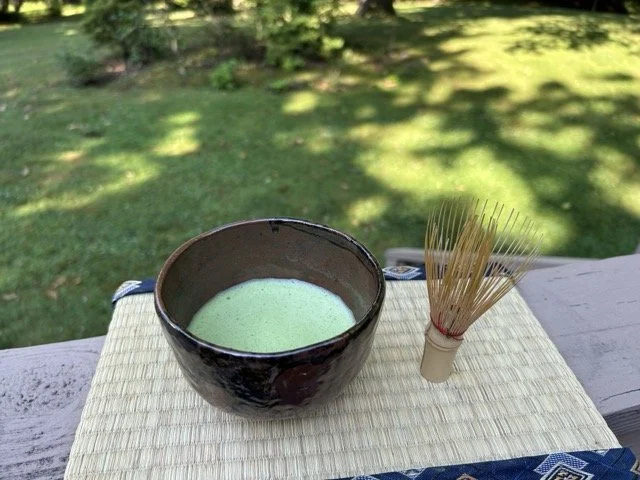
Tea bowl from my 101 years old aunt, matcha from Koyamaen, and Chasen by Tango Tanimura,my daily ritual.
Growing up in Nara, Japan, surrounded by tea fields, matcha has always been a part of my life. The full aroma and the deep bitter and sweet umami taste of this vivid green tea evokes so much nostalgia for me.
When I was in high school, I started taking formal tea ceremony lessons. It was a highlight of my week. Our tea master would always give my classmates and me delicious, seasonal Japanese wagashi (sweets) and flowers, and she invited us to watch and help during her tea ceremony at a prestigious temple in Kyoto.
I continue practicing Chado, the traditional Japanese tea ceremony for preparing matcha, powered green tea. Once I stopped for a time when I moved to the United States, but resuming the practice at Urasenke Chanoyu Center in New York has provided a valuable sense of community for me.
More than anything, I associate matcha with the wisdom of my elders. My 101-year-old aunt and my 99-year-old mentor, who I call Papa-san, have been making their own matcha for most of their lives. I’ve even inherited some of their matcha bowls and utensils.
Matcha is my No. 1 beverage for boosting longevity, and I drink it every day.
The health benefits of matcha
Matcha contains key nutrients like vitamins A, C and K; fiber; protein and the amino acid l-theanine, which has been shown to help improve sleep, reduce stress and boost cognitive function.
Matcha is my No. 1 beverage for boosting longevity, and I drink it every day- The health benefits of matcha
Matcha contains key nutrients like vitamins A, C and K; fiber; protein and the amino acid l-theanine, which has been shown to help improve sleep, reduce stress and boost cognitive function.
It also has polyphenols like epigallocatechin gallate (EGCG). Polyphenols are naturally occurring compounds in plants that are high in antioxidants and can help fight illness and inflammation.
Studies have also shown that matcha can reduce the risk of cardiovascular diseases and can improve your gut health as well.
There are so many ways to consume matcha, including sweet treats like cake, cookies, chia pudding and mochi.
How to receive a bowl of matcha in the traditional way
Since this my article was published in August 2024 from CNBC, matcha popularity has been continue surging, now you can find matcha café every where as well as public Chakai (tea ceremony)
If you ever have the opportunity to attend a Chakai or be served in a formal setting, there are several rules to follow — these are some key ones.
When you are served, say “Otemae chodai Itashimasu,” which means ”Thank you for serving tea to me.” Then pick up the bowl, hold it with both hands, take a moment to look at the color and enjoy.
After you finish, once again, look at the bowl and carefully hold it in both hands. Then return it back to the place where you were served.
The most important thing is to express your appreciation, relax and embrace the moment.
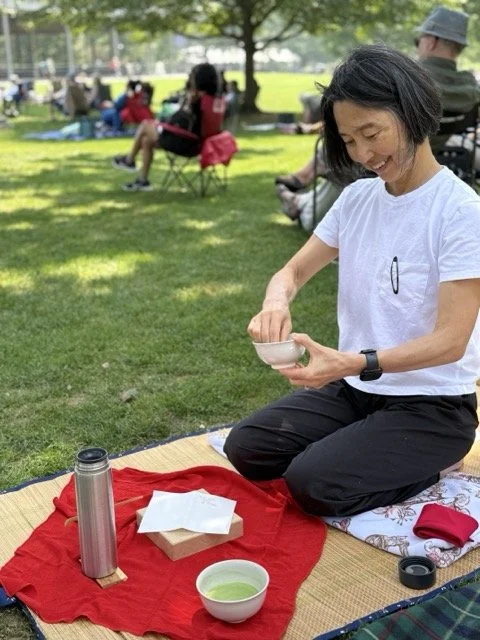
Summer time “ Nodate” matcha picnic at Tanglewood Music Center in Berkshire, MA,. with my family.
How I prepare my bowl of matcha every day
My day starts with offering a prayer and a bowl of matcha to my ancestors. Then I make a bowl for myself and one for my son before he goes to work as a physical therapist. This daily ritual for performing Chado fills me with such a sense of peace.
Here are the steps I take:
I boil approximately two cup of water.
I place half a cup of hot water into my bowl and with my chasen (bamboo tea whisk), I swirl the water several times to purify my tools. Takayama, a village in my home of Nara, is famous for making chasen.
I drain the water and then wipe everything with a clean cloth or paper towel.
With my chashaku (traditional bamboo tea scoop), I measure out two grams of green matcha powder and place it on the bottom of the bowl.
I slowly pour approximately 60 ml of hot water over the powder and enjoy the emerging aroma.
I hold the bowl carefully with my left hand and whisk, making sure to hold the chasen vertically, for about 20 seconds. I call this my “gift of Zen moment.”
During the summer, I will sometimes transfer the prepared tea into a portable thermos and add about half a cup of crushed ice for a refreshing and cool to-go treat.
There are so many tea maker in Japan, and some of my favorite makers of maker are Koyamaen and Ippodo both are based in Kyoto,and has been operational since the 1700s. Recently, I visited organic tea farm, Nakai Farm in Watuka, Kyoto, learned their passion providing real tea taste with mother nature, it’s little bitter with deep umami, higher ant oxidant because tea tree need higher immunity protecting from bugs without pesticide. I also recommend using bamboo tea whisks, which you can often find in Asian grocery stores or online.
If you’re just getting started, you can always use a small kitchen hand whisk or even a mason jar with a lid — but no blender, please, the matcha powder is so delicate.
After I complete this meditative routine, I always feel a little lighter. Simply put, it is healing.
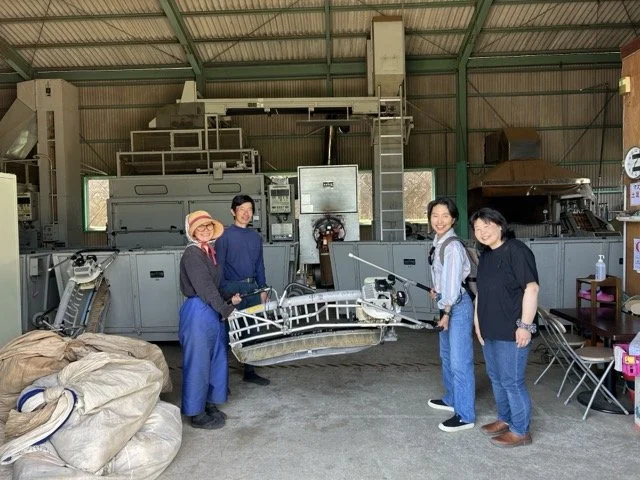
Nakai Organic Family Farm in Wazuka, Kyoto, Japan. So much learning and inspiration from their hard work providing and protection organic tea and mother nature. Mostly, so so delicious.
Where to Get Matcha?
There are so many tea maker in Japan, and some of my favorite makers of maker are Koyamaen and Ippodo both are based in Kyoto,and has been operational since the 1700s. Recently, I visited organic tea farm, Nakano Farm in Watuka, Kyoto, learned their passion providing real tea taste with mother nature, it’s little bitter with deep umami, higher ant oxidant because tea tree need higher immunity protecting from bugs without pesticide. I also recommend using bamboo tea whisks, which you can often find in Asian grocery stores or online.
If you’re just getting started, you can always use a small kitchen hand whisk or even a mason jar with a lid — but no blender, please, the matcha powder is so delicate.
After I complete this meditative routine, I always feel a little lighter. Simply put, it is healing.
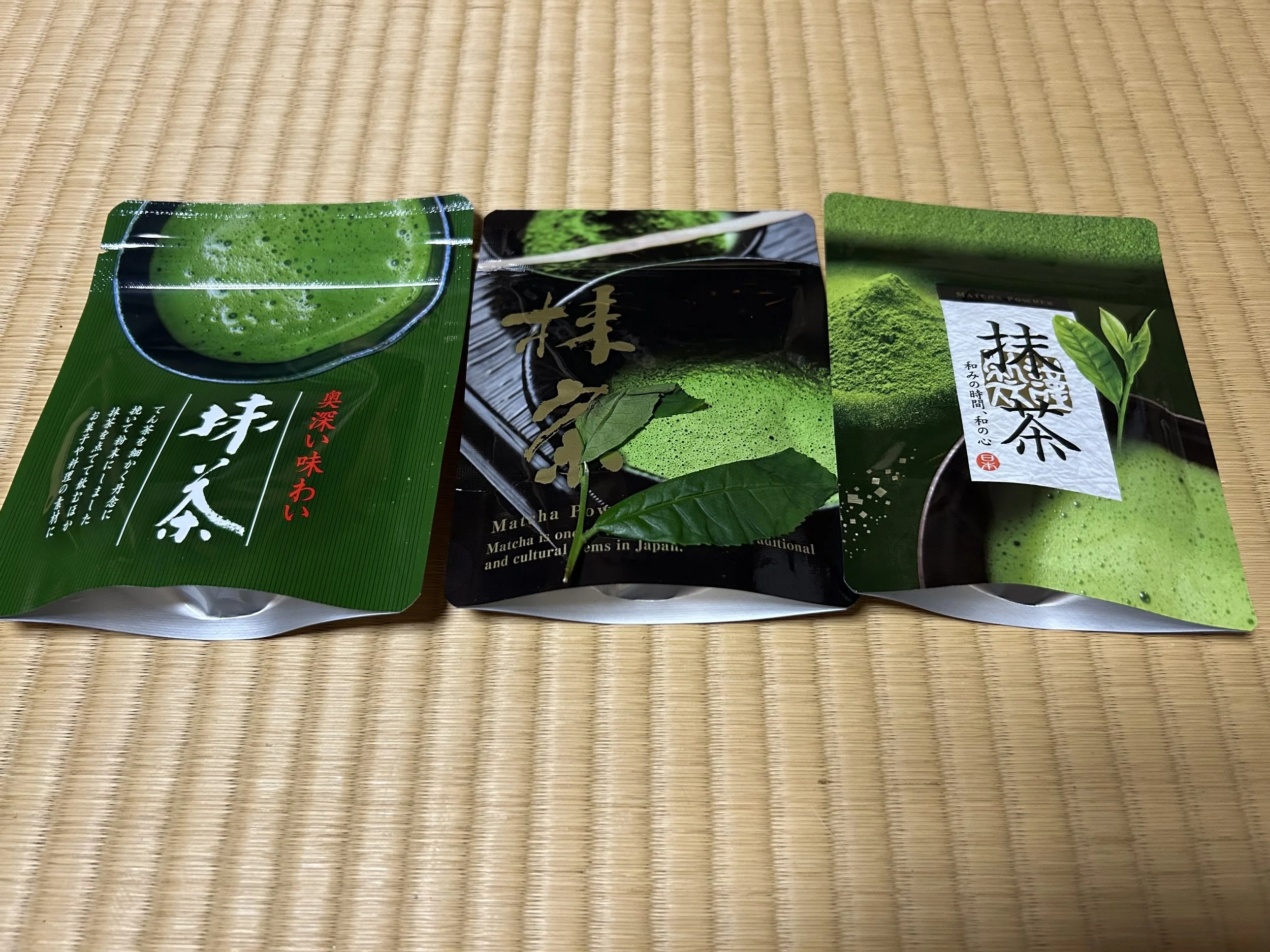
Organic matcha,, Deep bitterness with umami, refreshing my body and mind, high in nutrients, as well.
Cook Well, Eat Well, Love Yourself and loved one with a bowl of matcha.