
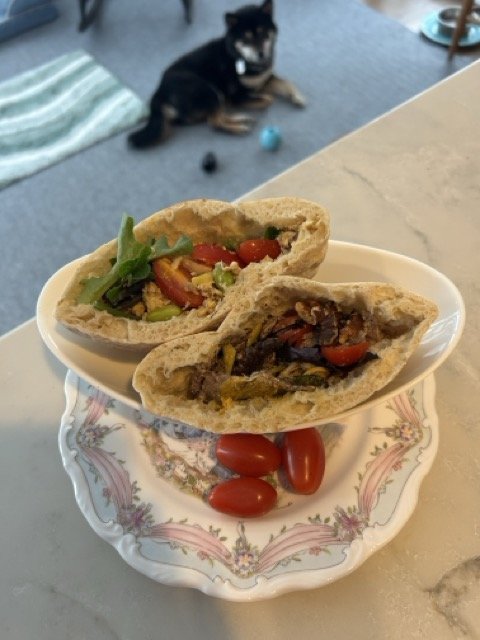
I have grown up with daily omega -3 without notice. Omega means great, complete in Greek.
Each day, some types of fatty fish, seaweeds, tofu or any other soy were part of my dishes and snacks. I was told consuming plenty of fatty fish, like mackerel (鯖-saba), pacific saury (秋刀魚-sanma), herring ( 鰊- nishin) and sardin (鰯-iwashi) making me smarter. I simply followed mom’s lesson without asking for any further scientific proof.
Numerous studies show the benefit in brain, heart, eyes, blood pressure, triglyceride, inflammation, allergy, memory, depression, diabetes, and even for cancer, here are why and what I eat.
Three types of Omega-3, ALA, EPA, DHA
Omega 3 is one of essential fat our body cannot make but must have for survival. It’s a type of PUFA ( Polyunsaturated fat) known for helping control inflammation in many ways. There are three types of Omega -3, DHA, EPA, and ALA, each has unique tasks and food sauces, here are what we should be aware of.
1. DHA ( Docosahexaenoic Acid) for “ brain and eye” fat, here is why.
Our brain, besides the fluid part, 60% is a mixture of fat, and approximate DHA weights 10-20% of brain fat Dr. Drew Ramsey explains in his book, Eat Complete, saying that DHA’s crucial fundamental function is as a building block in the brain cell and helps produce hormone cells called “neuroprotection.
Moreover, DHA is high in retina cells to support healthy retina formation for eye health.
Since we cannot produce any of Omega-3, it’s so important to have a constant supply of DHA. I am enjoying fatty fish 4-5 times per week, in a Japanese portion size of 2-3 oz per meal.
Main sauces
Fatty fish - mackerel, salmon, sardine, herring ( especially dark meat part)
Sailfish
1. EPA ( Eicosatetraenoic Acid) Heart health and anti-inflammatory, why?
EPA is another Omega-3. One of its unique functions is to produce “eicosanoid” which helps to reduce inflammation. That is why, EPA is well known for supporting heart health, lowering triglyceride, blood pressure, and cancer risk. EPA in the brain is smaller, less than 10% of DHA, though, EPA is a critical component in neurohemal. Numerous studies report consistent intake of EPA supports anti- depression, ADHD, heart related disease, inflammatory, Alzheimer, blood vessel relaxing, and so on.
Main Sources
Fatty fish, shellfish
Seaweeds daily mori, kombu, wakame, arame, piling up national EPA
1. ALA ( Alpha-linolenic acid )
The third type of Omega-3. ALA seems less focused as EPA and DHA. It's an essential fatty acid human cannot make and vital for human growth for sure.
Two distinct characteristics are 1) humans can use ALA to make EPA, then DHA, and 2) ALA can be obtained from familiar plants, like nuts, seeds, and leafy green vegetables. I need to notice that the conversion rate from ALA to EPA/ DHA is small, depending on the individual and health condition, generally less than 10%.
Main sauce
Flax seeds , chia seeds, hempseeds, Walnuts
Soy ( tofu, edamame, natto)
2. Three Myths about Omega-3
1.Meat and poultry “DO NOT” provide Omega -3
Some glass-fed meat has little ALA from glass or fortified foods caw eats but amounts never be enough. For instance, 3oz grass fed ground beef has less than 0.1g gram of mostly ALA with 6.75g of saturated fat. On the other hand, with the same amount of Atlantic wild salmon provides 1.5 g of total DHA/EPA with only 0.83g of saturated fat. Cheeseburger, pizza, hot dogs, and chicken nuggets really provide any Omega-3. I simply grill or bake and squeeze fresh lemon juice or marinade with miso for 2-3 days before baking.
2.Pregnant moms and young children may add fish into meals.
WIC ( Federal program for Women, Infant, and Children ) recommends regular fish consumption, now. Study shows the benefits of omega-3 during pregnancy. Expecting mothers who consume sufficient DHA/ EPA, are less likely to develop postpartum depression, and babies have a higher IQ level, and less likely to develop food allergy, ADAH, and postpartum depression. As always Please check your medical doctor first, always.
3.Americans are lacking Omega-3
U.S. health agencies offer no guidelines, though, study shows lower Omega-3 index for 95.5% of children and 68.3% of adults. The American Heart Association recommends 3-4 g of total EPA/DHA per day compared to the National Institution of health which recommends 1.6 g male and 1.1 g for females of ALA. Surprisingly, there is no recommended DHA/ EPA. In Japan, the Ministry of Health, Labor and Welfare recommends over 1g of DHA/ EPA and a total 2~3g of daily Omega-3. Simply, a Japanese portion of about 3oz fatty fish can be enough to meet recommendation. Japan has a higher Omega-3 Index compared to the US, indeed.
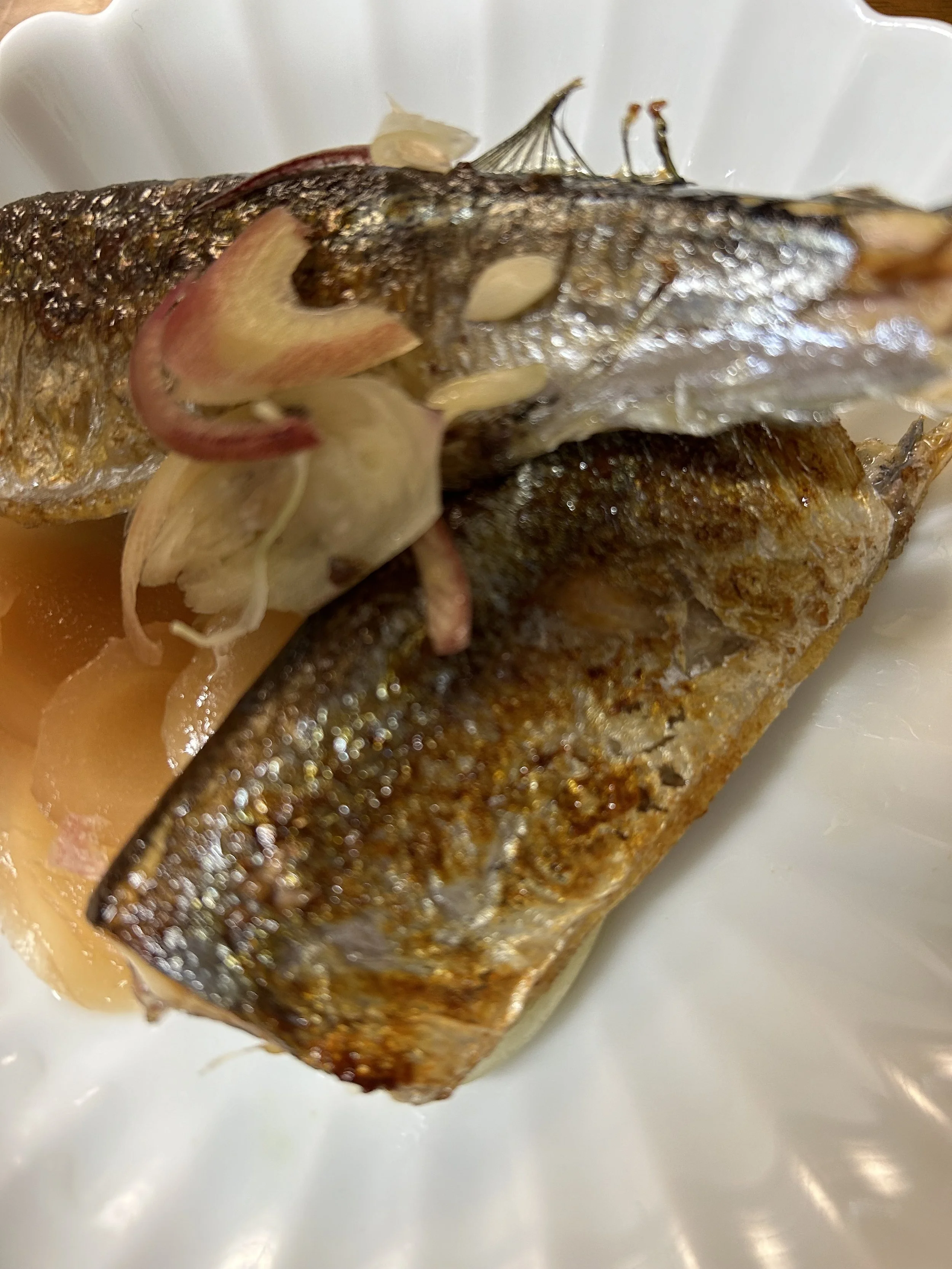
Grilled sardine and myoga ( Japanese ginger) , testy, sustainable, and affordable fish.
Simple Way adding Daily Omega-3
After I moved to the US, once I followed the US diet, roasted chicken, meatloaf, and BBQ, and dairy. I tended to stay away from seafood until my body orders that “it’s enough, back to Japanese roots.”
I have been noticed many are concerned about mercury and bacteria and do not know how to cook fish. I am especially afraid of the younger generation as they need DHA/EPA for their growth.
Here are my recommendations of a simple plus affordable way to get both together.
For DHA/EPA
1. Grilled or cooked mackerel and salmon
2. Canned sardine with oil and bone, Wild Alaskan salmon
3. Seaweeds, kombu- wakame, nori, arame, hijiki,
For ALA (vegan friendly)
4. Walnuts- roasted
5. Chia and flax seeds - pudding, Jello, adding to soup, dressing
6. Flaxseed oil, egoma oil
7. Leafy Greens for steam, cooked, soup, salad
8. Tofu and natto
Vegan friendly meal option meal plan:
Breakfast : Daily Chia/ flax seeds pudding
3 Tablespoons of chia seeds provide about 7g of ALA, plus 1oz walnuts, plus 1oz flax seeds.
Lunch
Leafy vege and natto wrapped with one big nori sheet plus whole grain pita with tofu and chik-pea, tofu, flaxseed humus.
Dinner
Multigrain and beans rice, seaweeds and spinach salad, and tofu and root veggies miso soupe.
Snack Edamame, roasted walnuts
Might not be enough, so you can add algae-based supplements into your daily routine, be sure to add, not replace, so you can enjoy the benefits of fiber, vitamins, minerals, proteins, and delicious tasting from Omega-3 rich vegan meals.
One bite counts, I constantly enjoy a mixture of DHA, EPA, ALA without counting.
Chia and flax pudding: In a jar, combine chia seeds, ground flax seeds, frozen fruit, and milk (unsweetened soy milk works well). Shake and refrigerate overnight. Top with fruit, nuts, or dark chocolate chips.
Omega-3 fish pockets: Use canned sardines, mackerel, or wild salmon. Drain, add lemon juice or apple cider vinegar, and season with spices. Serve in a whole-grain pita with cucumber and tomato.
Chia pancakes: Combine whole wheat or buckwheat flour with chia and flax seeds. Add berries, dark chocolate chips, or a drizzle of maple syrup. Kids can help flip the pancakes, making them both a snack and an interactive cooking experience.
Here are my choices of several tyles of fishes lower side of food chain + high in Omega-3, mackerel, Wild Atlantic salmon, sardine, anchovy, herring are my choice.
You can check safety fish from FDA to choose wisely. https://www.fda.gov/food/consumers/advice-about-eating-fish